
Elon Musk criticizes environmental regulations amid a chemical scandal
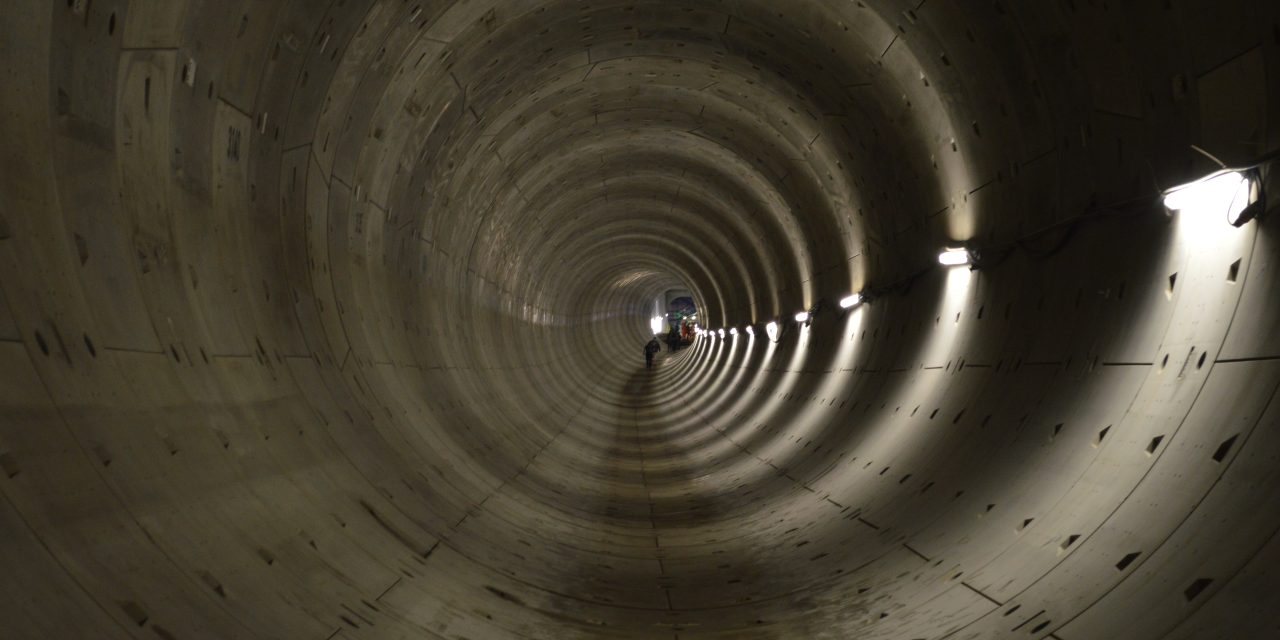
A ProPublica investigation with partner newsrooms reports that Elon Musk and Texas U.S. Representative Wesley Hunt are advocating for The Boring Company’s involvement in a $760 million flood-control project in the Houston area. The project involves tunnels to divert floodwaters, which could become potentially the largest infrastructure contract in the company’s history.
The idea appears to be an attempt to offer the city a technology that is usually associated with transportation tunnels. This raises a practical question: how closely Boring Co.’s engineering approach aligns with the requirements of floodwater diversion specifically during extreme rainfall and in emergency scenarios.
Why the proposal has raised questions
The investigation materials list doubts that have already been voiced by experts and some local officials. At the center of the discussion are not only price and timelines, but also whether the design matches flood-control goals, as well as the full slate of approvals without which such work is impossible.
Key questions that have been raised publicly include the following points:
- whether the proposed plan matches the project’s design parameters and previously studied alternatives
- whether the tunnels’ capacity will be sufficient at the peak of flooding, when every hour counts
- whether the new construction will create additional risks for city infrastructure, including utility lines and bridge foundations
- which specific environmental, construction, and water-related permits will be required and who will provide oversight at every stage
The story is also important because the final regulatory framework is not yet clear. For projects like this, the rules are often made up of multiple layers—from city procedures to state requirements and federal agencies, if water bodies and protected areas are affected.
How Wesley Hunt and Boring Co. are promoting the idea
Journalists found that Wesley Hunt took part in promoting Boring Co.’s involvement, even though specialists pointed to technical discrepancies with the parameters discussed by floodwater-diversion experts. In particular, it was noted that the company typically builds tunnels that are narrower than those considered during the project’s development.
In its presentations to lawmakers, Boring Co. described the initiative as an innovative, cost-effective solution. This phrasing works as a political argument, but in engineering terms leaves room for clarification, since savings may depend on depth, diameter, geology, utility relocation costs, and water treatment and monitoring requirements.
Experts’ assessments and local officials’ response
Some engineers cited by the investigation warned that the volume of the tunnels in the proposed configuration could prove insufficient during severe flooding. Another set of complaints is related to the depth, which, according to assessments, could lead to conflicts with existing utility lines and bridge foundations.
Skepticism has also been voiced at the political level. One county commissioner, a Democratic Party representative, said that Musk should not participate in the Houston project and described his approach as a blatant disregard for democratic institutions and environmental safeguards. This is the source’s value judgment, not an established fact, but it shows that the debate goes beyond a single cost estimate.
Reaction after publication and an area of uncertainty around permits
Before the story was published, Hunt, Musk, and Boring Co. representatives did not respond to journalists’ requests for comment. After publication, Hunt and Musk posted on X in defense of the project. Musk said the tunnels would cost less than alternatives, and that increasing the number of tunnels allegedly could increase water flow, while he did not provide detailed calculations.
The City of Houston has not yet selected a contractor for the tunnel portion. Competitive bidding procedures and selection of the contractor remain ahead, followed by design, impact assessment, and permitting, which may include environmental, construction, and water-related approvals depending on the final configuration. It is still unclear which specific requirements will prove key and at what level they will be applied—city, county, state, or federal authorities.
Texas context and earlier environmental disputes involving Musk’s companies
In recent years, Musk himself has publicly criticized environmental regulation, calling it an obstacle to innovation and fast timelines. In Texas, his entities have increased their political and lobbying influence, and the state itself has long been known for a more permissive regulatory environment. Governor Greg Abbott mentioned Musk as inspiration when creating in the state an office conceptually comparable to the federal “DOGE.”
Against this backdrop, the investigation notes that projects by Musk’s companies have already faced claims from regulators and environmental organizations. The Boring Company in Las Vegas, according to earlier ProPublica reporting, bypassed some construction, environmental, and labor procedures by framing elements as a private project and relying on local connections; at the same time, wastewater violations and a Nevada OSHA fine that the company disputed were recorded. In Texas, at the Bastrop site, claims by the Texas Commission on Environmental Quality, fines and subsequent changes were mentioned, as well as a story involving wastewater plans and the decision to send it to the city’s treatment plants, which are expected to launch in 2026; at the same time, Boring Co. did not respond to ProPublica’s request.
xAI in Memphis launched the Colossus data center for Grok, using methane-fueled generators due to a shortage of grid capacity, which sparked a dispute over the need for permits and the volume of emissions. The company cited an exemption for generators used for less than a year, the Shelby County Health Department agreed with that logic, the EPA showed interest in checking the applicability of the exemption, and a permit for 15 generators was approved in early July; at the same time, opponents spoke of a larger number of installations, and xAI did not respond to ProPublica’s request.
SpaceX in South Texas faced claims under the Clean Water Act due to the discharge of untreated industrial wastewater and a cross-border discussion about debris after launches; the company settled the dispute for about $150,000 and obtained a state permit, and the FAA approved up to 25 Starship launches per year, while SpaceX said there was no danger to the surrounding area. Tesla received warnings and fines for toxic emissions in California, settled a counties’ lawsuit over hazardous waste for $1.5 million without admitting wrongdoing and, according to The Wall Street Journal, faced claims from Texas regulators and inspections prompted by a whistleblower tip; at the same time, Musk called traditional media reports lies, and the company did not respond to ProPublica’s request.
Starlink as one of Musk’s most controversial projects
Starlink satellites can provide high-quality internet even in remote corners of the planet—this has already been proven. It is hard for a modern person to imagine life without the World Wide Web. therefore, users do not even think about the fact that it can be dangerous for the environment. People want to be able to make video calls, use telemedicine services, and play the Aviatrix casino game. All these processes require not only fast but also stable internet. Starlink provides both.
But from the point of view of environmentalists, this is one of the most dangerous projects for the ozone layer. When thousands of Starlink satellites are decommissioned, they burn up in Earth’s atmosphere. As a result, particles of aluminum oxide are formed, which destroy the ozone layer. The company regularly claims that the particles from burning up, in and of themselves, do not pose a significant danger. However, scientists point out that the data on their long-term impact are still insufficient for such a confident claim.
Timeline of regulatory episodes from 2018 to 2025 and near-term decision points
In 2018, Musk, speaking about Starship tests, mentioned that there were few people around the site, and this irritated residents of the nearest settlement. In 2023, Nevada OSHA fined Boring Co., and Starship launches, according to the EPA and the Texas regulator, were accompanied by violations of water-related requirements. In 2024, xAI launched a project in Memphis and argued about permits for generators, Tesla faced lawsuits over waste, SpaceX applied for a water permit and settled claims, and in Texas lobbying of infrastructure initiatives was discussed. In 2025, Texas regulators issued SpaceX a permit, and the story with xAI’s permits developed against the backdrop of expansion plans.
The project’s future course in Houston depends on who becomes the contractor and what tunnel parameters are built into the final project, as well as on the full slate of approvals and impact-assessment procedures. In parallel, oversight of xAI’s permit compliance, implementation of requirements for Tesla and SpaceX, and possible additional requests from regulators that were previously reported publicly remain.