
Fulcrum BioEnergy halts operations at a waste-to-fuel plant near Reno
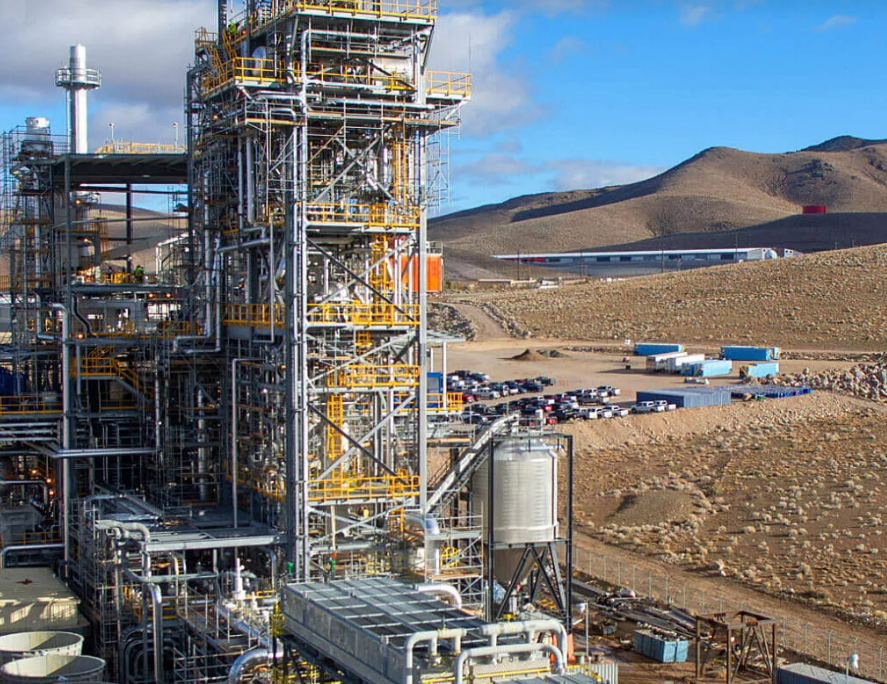
In mid-May, U.S.-based Fulcrum BioEnergy effectively halted operations at its flagship facility near Reno, Nevada, and sharply cut headcount. The news was a notable blow to the reputation of commercial gasification of municipal solid waste as a pathway to low-carbon fuels and chemical feedstocks.
According to industry sources, most employees were laid off, and the facility ceased production. The company’s website was unavailable, and Fulcrum BioEnergy’s management did not respond to requests for comment, so many details remain based on indirect indications and source accounts.
What the Reno-area project was—and what the company claimed
The plant began operating in late 2022. Fulcrum BioEnergy called it the world’s first commercial facility of this scale that turns landfill waste into motor fuel. Nameplate capacity was estimated at 42 million liters of fuel per year, and headcount was about 120 people.
The site’s product was synthetic crude, which was sent to Marathon Petroleum for further refining. Fulcrum BioEnergy claimed that the resulting transportation fuel had a CO2 footprint less than 20% of that of its fossil equivalent, but the company provided no independent, publicly available verification of this estimate in its materials.
How city trash was turned into synthetic crude
Fulcrum BioEnergy’s scheme relied on gasification—i.e., the thermochemical breakdown of waste at high temperature with limited oxygen. The feedstock was municipal solid waste diverted from landfill; it then underwent drying and partial sorting.
The process can then be described step by step:
- Feedstock preparation, removal of some undesirable fractions, moisture reduction
- Gasification at extreme temperature in an oxygen-deficient environment, formation of syngas
- Syngas composition, primarily CO and H2, i.e., carbon monoxide and hydrogen
- The Fischer–Tropsch stage, converting syngas into a hydrocarbon mixture similar in properties to oil
- Shipment of synthetic crude to a partner for refining and production of finished fuel
This route is often compared to trying to assemble a new fuel from heterogeneous feedstock along a chain where every link is sensitive to mixture quality and equipment stability. The weak point typically emerges where compositionally variable waste meets chemistry that is demanding in terms of operating conditions.
Permits in Nevada and stop-work orders
According to a source, one of the problems was permits for sustained operation from the Nevada Division of Environmental Protection. State records confirm that Fulcrum BioEnergy received permitting documents in September 2023, as well as in March this year.
At the same time, the same state materials include stop-work orders that were cited as late as March. They were linked to changes in permits and the need for equipment modifications, because the boilers and generators were undersized for the stated operating conditions, requiring design adjustments.
Disruptions after a rushed start-up and a former employee’s account
A former employee of the operations unit, speaking on condition of anonymity, links the company’s crisis to management decisions and actions at the corporate level. He claims that a rushed commissioning in 2022 led to severe consequences already after the first production run.
According to him, the facility was shut down for months due to significant damage, and it also faced severe clogging that made it impossible for part of the equipment to operate. Being forced to operate at half capacity was replaced by a full shutdown for repairs and upgrades. These claims have not been corroborated by the company’s public statements, since Fulcrum BioEnergy’s management did not comment on the situation.
Money, investors, and resistance around the Indiana project
The difficulties coincided with a time when the project especially needed financial viability. According to PitchBook, by June 2023 Fulcrum BioEnergy had raised about $467 million in investment, underscoring market expectations for the technology.
The source also points to the role of investor SK Group, one of the largest backers. At the end of 2023, the South Korean industrial conglomerate underwent a leadership change, and, according to the interlocutor, the new leaders halted further investment, citing a lack of profitability and the operational complexity of running the plant. An additional backdrop for the company remained strong local opposition to plans for a second project in Gary, Indiana.
How the project’s closure affected the state
The project’s closure was another serious blow to Nevada’s economy. The state is already going through a difficult period amid a significant drop in gambling revenue. It still remains one of Nevada’s main financial sources; however, intense competition from online casinos has caused this source to dwindle.
Virtual gambling platforms are an opportunity for players to maintain privacy, as well as access to a wide variety of gambling games. There are more of them than in a regular casino, and in recent years more and more exclusive offerings have appeared. First and foremost, this concerns new mechanics, and there are also more and more traditional games adapted for online play.
One of the most in-demand categories has become traditional national games. These include Ludo, Mahjong puzzles, and Andar Bahar. Such games are popular among players, which is why many online casinos offer them. This is confirmed by data from the website https://andarbahar.com.in, which features a top-5 list of casinos with Andar Bahar. As can be seen from this data, modern players have no trouble finding this game.
Interest in online casinos is constantly growing, while land-based gambling venues are seeing a decline in visitor numbers. For Nevada, which has relied for decades primarily on gambling income, this is a serious blow. The closure of investment projects, especially ones as large as Fulcrum BioEnergy’s facility, exacerbates the situation.
The uneven track record of the gasification market and options for the Reno-area site
Commercial waste gasification has repeatedly gone through lofty expectations and harsh reality checks. One of the best-known examples is that Air Products and Chemicals abandoned its Teesside project in England in 2016, reporting a loss of about $1 billion, which long served as a warning for the industry.
This year, Enerkem closed its first commercial plant in Edmonton, Alberta, citing unfavorable market and regulatory conditions. According to CBC News, the facility never reached its promised capacity, although Enerkem itself calls the facility a technological success and is building a plant near Montreal for 125 million liters of biofuel per year from 200,000 tonnes of waste and wood residues with a start date in 2025, while also developing a methanol project in Spain and two dimethyl ether projects.
Even if Fulcrum BioEnergy cannot continue operating as a company, the Reno-area site itself, in the former employee’s assessment, is not necessarily doomed. He believes that after modifications they could try to restart the facility, or sell it to a new owner, and the work required for a restart, according to him, was nearly complete by the on-site team.