
The modern world runs on magnetism. From the electric vehicles revolutionising transportation to the wind turbines powering our renewable energy future, permanent magnets are at the heart of countless technological innovations. As industries evolve toward more compact, efficient, and sustainable solutions, the methods used to secure these critical components have become increasingly sophisticated. Enter magnet bonding—a specialised field where advanced adhesive technologies are replacing traditional mechanical fasteners to enable the next generation of magnetic assemblies.
The Magnetic Revolution Across Industries
Magnets have become ubiquitous across virtually every sector of modern industry. In automotive applications, they’re essential components in electric vehicle motors, sensors, and hybrid powertrains. Consumer electronics rely on magnets for speakers, hard drives, and smartphone vibration motors. The renewable energy sector depends on powerful permanent magnets in wind turbine generators and solar tracking systems. Healthcare industries utilise magnets in MRI machines and medical devices, while robotics and aerospace applications demand precise magnetic positioning and actuation systems. Even retail displays and industrial lifting equipment benefit from magnetic solutions.
This widespread adoption has been driven by the unique properties of different magnet types, each optimised for specific applications. Understanding these materials is crucial for selecting appropriate bonding solutions.
Understanding Magnet Types and Their Characteristics
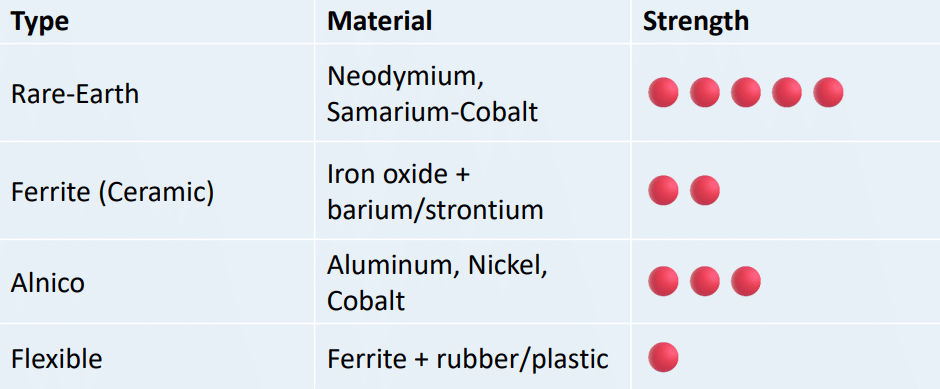
Modern permanent magnets fall into four primary categories, each with distinct properties that influence adhesive selection:
- Rare-Earth Magnets: represent the most powerful category, including neodymium (NdFeB) and samarium-cobalt (SmCo) varieties. Neodymium magnets offer exceptional magnetic strength but are inherently brittle and prone to corrosion, with limited heat resistance. These characteristics make them ideal for electric vehicle motors, wind turbines, smartphones, and headphones, but require careful handling during assembly. Samarium-cobalt magnets provide strong magnetic fields with superior high-temperature and corrosion resistance, though at a higher cost. They’re commonly found in aerospace sensors, military technology, high-temperature motors, and oil drilling equipment.
- Ferrite (Ceramic) Magnets: offer a cost-effective solution with lower magnetic strength but excellent corrosion resistance. These magnets are perfect for applications like refrigerator doors, toy magnets, and small motors where high strength isn’t critical but reliability and affordability are paramount.
- Alnico Magnets: composed of aluminum, nickel, and cobalt, provide excellent temperature stability and corrosion resistance, though with lower coercivity than rare-earth alternatives. Classic applications include guitar pickups, magnetic sensors, vintage car ignition systems, and industrial lifting equipment.
- Flexible Magnets: combine ferrite particles with rubber or plastic matrices, creating bendable magnetic materials suitable for gaskets, signage, and craft applications.
Why Adhesive Bonding is Superior to Mechanical Fasteners
Traditional magnet attachment methods, including mechanical clamping, welding, and wrapping techniques, face significant limitations in modern applications. As design tolerances become tighter and performance requirements more demanding, these conventional approaches often fall short.
Adhesive bonding offers numerous advantages that make it the preferred choice for contemporary magnet assembly. Unlike mechanical fasteners that create stress concentration points, adhesives distribute mechanical stress evenly across the entire bond area, significantly reducing the likelihood of failure. This even stress distribution is particularly crucial for brittle rare-earth magnets that can crack under point loads.
The bonding process itself is gentler on components, eliminating the risk of damage that can occur during drilling, welding, or mechanical clamping operations. For sensitive magnetic materials, this protection is invaluable. Additionally, adhesive bonding enables the creation of lighter assemblies by eliminating heavy mechanical hardware, contributing to overall system efficiency.
Key Adhesive Technologies for Magnet Bonding
The selection of appropriate adhesive technology depends on multiple factors including magnet type, environmental conditions, cure requirements, and mechanical loads. Five primary adhesive categories serve the magnet bonding market:
- Epoxy Adhesives represent the gold standard for structural bonding applications. These thermosetting polymers provide excellent strength, heat resistance, and chemical resistance. They’re available in both single-part (heat-cured) and two-part (ambient-cured) formulations, offering flexibility in processing conditions. Epoxies excel with most magnet types and are particularly well-suited for applications requiring long-term durability and environmental resistance.
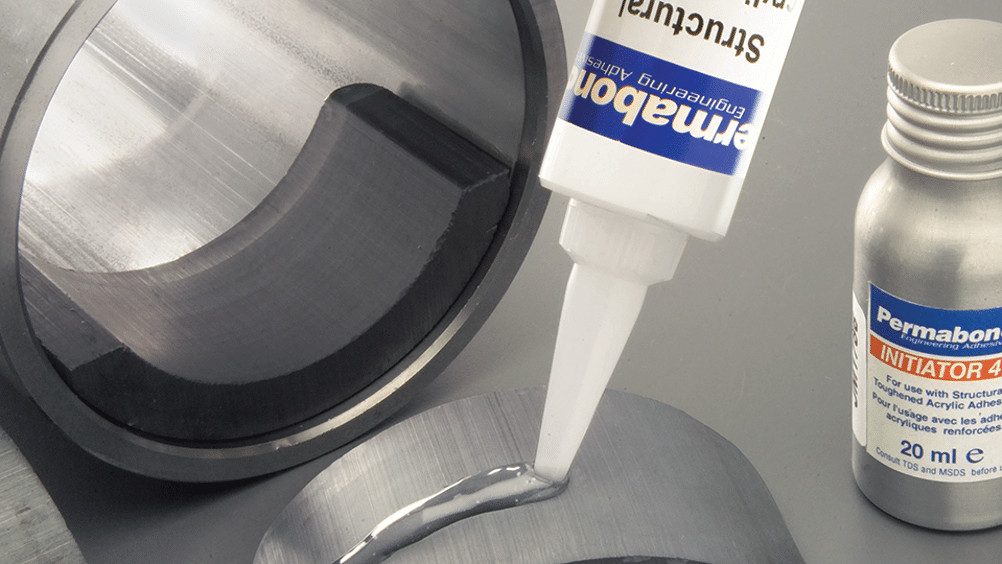
- Structural Acrylics offer rapid curing capabilities combined with excellent peel and impact strength. These adhesives are ideal for high-speed production environments where fast fixture times are critical. Modern structural acrylics can achieve working strength in seconds while developing full cure properties over time.
- Cyanoacrylate Adhesives provide single-part convenience with exceptional ease of application. While they offer excellent adhesion to many substrates, including plastics commonly found in electronic assemblies, they have limitations in terms of impact resistance and heat resistance that must be considered in application design.
- Anaerobic Adhesives cure in the absence of air and are compatible with certain types of magnets, particularly those with metallic surface treatments. They’re well-suited for threaded applications and provide excellent chemical resistance once cured.
- Silicone Adhesives demonstrate superior flexibility and thermal cycling resistance. While they typically provide lower structural strength than other options, their ability to accommodate thermal expansion and contraction makes them valuable for applications exposed to temperature variations.
Matching Adhesives to Magnet Types
Successful magnet bonding requires careful consideration of both magnet characteristics and application requirements. Each magnet type presents unique challenges that influence adhesive selection.
- Neodymium magnets: the combination of high magnetic strength, brittleness, and corrosion susceptibility demands careful adhesive selection. Epoxy adhesives provide excellent structural strength while protecting the magnet from environmental exposure. Anaerobic adhesives can be used effectively when magnets feature metallic surface coatings, though compatibility testing is essential.
- Samarium-cobalt magnets: with their superior high-temperature performance and corrosion resistance, pair well with silicone adhesives for thermal cycling applications. Epoxy adhesives and structural acrylics also perform well, while anaerobic adhesives offer another viable option for specific applications.
- Ferrite magnets: being less expensive and more forgiving, work well with a broader range of adhesive technologies. Epoxies provide maximum strength, cyanoacrylates offer processing convenience, and structural acrylics deliver rapid production capabilities.
- Alnico magnets: with their excellent environmental stability, are compatible with most adhesive types. The selection often comes down to processing requirements and mechanical performance needs rather than compatibility concerns.
Special Considerations for E-Coated Magnets
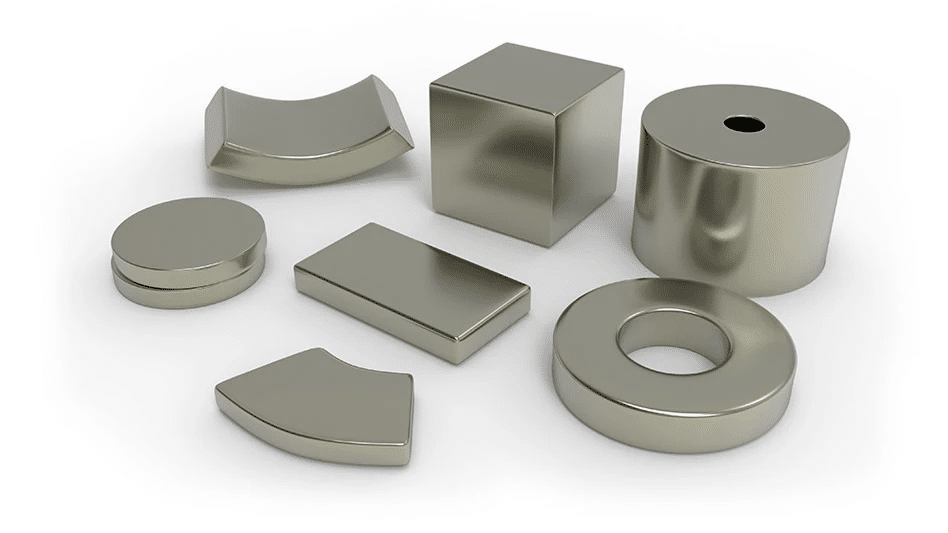
Many modern magnets, particularly rare-earth varieties, feature protective coatings applied through electrophoretic deposition. These e-coated magnets may have epoxy, polyimide, rubber, or PTFE-based surface treatments that significantly impact adhesive bonding performance.
Successful bonding to coated magnets often requires specialised surface preparation techniques. Corona treatment, plasma treatment, or mechanical abrasion may be necessary to achieve optimal adhesion. For particularly challenging substrates, specialised adhesive formulations designed for difficult-to-bond materials may be required.
Permabond’s Innovative Solutions
Permabond have developed several specialised adhesive solutions that address the unique challenges of magnet bonding across various industries.
- TA439 Acid-Free Structural Acrylic represents a breakthrough in high-speed magnet assembly. This no-mix structural acrylic achieves fixture times of 20-40 seconds, making it ideal for high-volume production lines. The acid-free formulation is particularly important for sealed electric motors, where traditional methacrylate adhesives could cause corrosion to sensitive components. TA439 provides high strength, tough, durable bonds with excellent impact resistance and drop test performance. It’s designed for use with metals, ferrites, ceramics, and select plastics, working in conjunction with Initiator 41M for most applications or Initiator 43 for plastic substrates.
- ES5516 Dual Cure Epoxy/UV Adhesive addresses the challenge of bonding magnets in permanent magnet synchronous motors and other applications where mechanical clamping is impossible. This innovative adhesive features dual cure activation—UV light provides initial tacking or sealing, while thermal curing develops full structural properties. The lightly thixotropic formulation helps prevent adhesive migration during assembly, while the toughened chemistry provides excellent chemical resistance and heat resistance up to 180°C on metals and composites. An added benefit is UV fluorescence, which enables in-line quality control verification.
- UV7146 Dual Cure AA/UV Adhesive combines UV curing with a secondary anaerobic cure mechanism, making it perfect for pocket magnet applications where UV light cannot penetrate to all adhesive areas. The UV cure provides immediate tacking in seconds, reducing jigging requirements and speeding production rates, while the anaerobic cure mechanism ensures complete polymerization in shadow areas for optimal long-term performance.
The Future of Magnet Bonding
As industries continue to evolve towards more sophisticated applications, magnet bonding technology will undoubtedly advance to meet new challenges. The growth of electric mobility and renewable energy sectors continues to drive demand for more efficient, reliable magnet attachment methods. Advanced adhesive formulations will likely incorporate improved thermal management properties, enhanced environmental resistance, and even greater processing flexibility.
The trend toward miniaturisation in electronics and increased power density in motors will place additional demands on bonding technologies. Future solutions may incorporate smart materials that respond to environmental conditions or provide real-time monitoring of bond integrity.
Understanding the fundamental principles of magnet bonding—from material selection through application techniques—remains crucial for engineers and manufacturers working across these dynamic industries. As magnetic technologies continue to power innovation across virtually every sector of modern life, the adhesive technologies that secure these critical components will play an increasingly important role in enabling the next generation of technological advancement.
The combination of proven adhesive science with innovative application-specific solutions positions magnet bonding as a critical enabling technology for the sustainable, efficient future that magnetic assemblies help create.